
Eggplant Curry is a delightful South Indian Brinjal Curry that brings a burst of flavors and textures to your table. This comforting dish combines tender eggplants with aromatic spices, making it a fulfilling meal option for families and friends alike. With its creamy coconut milk base and rich spices, this curry is not only easy to prepare but also reminiscent of traditional Indian hospitality. In this article, we’ll take you through a step-by-step recipe to create your own Eggplant Curry, perfect for a weeknight dinner or a cozy weekend meal.
Ingredients
To make this scrumptious Eggplant Curry, you will need the following ingredients:
- Vegetable oil (or canola) – 2 tbsp
- Eggplant (aubergine) – 700g / 1.2 lb (about 2 medium-sized)
- Salt – 1/2 tsp
- Pepper – 1/2 tsp
- Vegetable oil (or canola) – 3 tbsp
- Black mustard seeds – 3/4 tsp
- Curry leaves (fresh) – 14 leaves
- Red onion – 1, quartered and thinly sliced
- Passata or tomato pulp (or canned tomato) – 3 tbsp
- Garlic – 1 tbsp, grated (approximately 4 cloves)
- Ginger – 1 tbsp, grated (approximately 1.5 cm piece)
- Water – 1 1/4 cups
- Salt – 3/4 tsp
- Coconut milk (or cream, full fat) – 3 tbsp
- Cardamom powder – 1/4 tsp
- Ground clove – 1/4 tsp
- Black pepper – 1/4 tsp
- Chilli powder (or cayenne, NOT US Chili Powder) – 1/2 tsp
- Coriander powder – 4 tsp
- Cumin powder – 4 tsp
- Basmati rice – for serving
- Yogurt – highly recommended for serving
- Coriander/cilantro leaves – optional, for garnishing
- Easy flatbread (like naan) – optional, for serving
The rich and creamy elements combined with aromatic spices create a genuinely satisfying dish that will leave your taste buds wanting more.
Step-by-Step Directions
Roasting the Eggplant
- Preheat your oven to 240°C / 450°F (220°C fan). Line a tray with parchment paper for easy clean-up.
- Cut the eggplant into 2 cm (about 4/5”) slices, then cut each slice into 2 cm (about 4/5”) batons.
- Place the eggplant batons in a large bowl, toss them with vegetable oil, salt, and pepper.
- Spread the eggplant batons on a lined tray and roast in the oven for 20 minutes. After 20 minutes, turn the batons and roast for an additional 10 minutes. The edges should be caramelized and soft while the insides remain tender but not shriveled.
Preparing the Curry Base
- Heat 3 tbsp of vegetable oil in a large pot over medium heat. Add black mustard seeds and let them sizzle for about 15 seconds, releasing their nutty aroma.
- Add the curry leaves to the pot and stir. Allow them to sizzle together for another 15 seconds—this part can be quite dramatic as the mustard seeds may pop!
- Toss in the sliced red onions and sauté for about 5 minutes until they become golden brown and fragrant.
- Mix in the tomato paste or pulp, cooking for about 1 minute while stirring continuously.
- After that, add the grated garlic and ginger, cooking for a further 2 minutes.
Mixing in the Spices and Eggplant
- Stir in the curry spices: cardamom powder, ground cloves, black pepper, chilli powder, coriander powder, cumin powder, and salt. Cook for about 3 minutes until it forms a thick paste. Be cautious not to let it burn. If it starts sticking to the bottom of the pot, quickly add a splash of water to loosen it.
- Pour in your 1 1/4 cups of water and gently add the roasted eggplant. Stir carefully, ensuring the eggplant is coated well with the spice mixture.
- Partially cover the pot, reduce the heat to low, and simmer for about 30 minutes. Be sure to stir carefully only once or twice to keep the eggplant intact, adding more water if necessary.
Finishing Touches
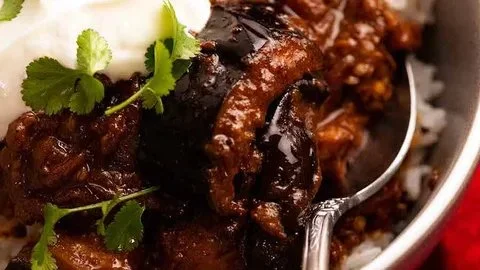
- Finally, stir in the coconut milk for a creamy texture. Taste and adjust salt if needed. Your curry should now be a thick, juicy, and flavorful dish where the eggplant is partially intact but also soft.
Serving Options
- Serve warm with fragrant basmati rice and a dollop of yogurt on top. If you’re looking for an extra touch, sprinkle fresh coriander leaves and enjoy with some easy flatbread like naan.
Tips & Tricks
For an enhanced flavor profile, consider marinating the eggplant in spices before roasting. This method allows the spices to penetrate deeper into the vegetable, delivering a richer taste. Always keep your curry at a low simmer to prevent burning or sticking, and adjust the thickness by adding small amounts of water as it cooks.
Serving Suggestions & Pairings
This Eggplant Curry is perfect for a family dinner or a meal with friends. It pairs beautifully with fluffy basmati rice or soft naan, making it an excellent option for a comforting weeknight meal. For a wholesome experience, serve it with a side of cooling cucumber salad or pickled veggies, complementing the spice of the curry.
Nutritional Information
One serving of this Eggplant Curry contains approximately 350 calories. This dish is a great source of fiber, vitamins, and healthy fats from the coconut milk, creating a balanced meal option. Pair it with protein-rich yogurt to enhance the nutritional value.
Storing Tips & Variations
Store any leftovers in an airtight container in the fridge for up to three days. You can also freeze the curry for up to two months. When reheating, add a splash of water to maintain the curry’s creamy texture. For variations, consider adding chickpeas or lentils for added protein, or even switch the eggplant for other vegetables like zucchini or bell peppers.
Conclusion
Now that you have the step-by-step guide to making this delicious Eggplant Curry, it’s time to get cooking! The vibrant flavors and creamy texture will surely impress your family and friends. Don’t forget to share your experience and how your curry turned out!
FAQs
1. Can I use other types of eggplant?
Yes! You can use any type of eggplant, such as Japanese or Chinese varieties, depending on your preference and availability.
2. Is this curry vegan?
Absolutely! This Eggplant Curry is vegan-friendly as it contains no animal products.
3. Can I make it spicier?
Certainly! You can increase the amount of chili powder or add fresh chopped green chilies to amp up the heat.
4. What can I substitute for coconut milk?
If you prefer, you can use almond milk or cashew cream for a different flavor, though it may alter the final taste.
5. Is this an authentic South Indian recipe?
While this recipe is inspired by traditional South Indian cooking, it has been adjusted for home cooks with easily obtainable ingredients.
Eggplant Curry
Ingredients
Method
- Preheat your oven to 240°C / 450°F (220°C fan). Line a tray with parchment paper for easy clean-up.
- Cut the eggplant into 2 cm (about 4/5”) slices, then cut each slice into 2 cm (about 4/5”) batons.
- Place the eggplant batons in a large bowl, toss them with vegetable oil, salt, and pepper.
- Spread the eggplant batons on a lined tray and roast in the oven for 20 minutes. After 20 minutes, turn the batons and roast for an additional 10 minutes. The edges should be caramelized and soft while the insides remain tender but not shriveled.
- Heat 3 tbsp of vegetable oil in a large pot over medium heat. Add black mustard seeds and let them sizzle for about 15 seconds, releasing their nutty aroma.
- Add the curry leaves to the pot and stir. Allow them to sizzle together for another 15 seconds.
- Toss in the sliced red onions and sauté for about 5 minutes until they become golden brown and fragrant.
- Mix in the tomato paste or pulp, cooking for about 1 minute while stirring continuously.
- After that, add the grated garlic and ginger, cooking for a further 2 minutes.
- Stir in the curry spices: cardamom powder, ground cloves, black pepper, chilli powder, coriander powder, cumin powder, and salt. Cook for about 3 minutes until it forms a thick paste.
- Pour in your 1 1/4 cups of water and gently add the roasted eggplant. Stir carefully, ensuring the eggplant is coated well with the spice mixture.
- Partially cover the pot, reduce the heat to low, and simmer for about 30 minutes. Be sure to stir carefully only once or twice to keep the eggplant intact, adding more water if necessary.
- Finally, stir in the coconut milk for a creamy texture. Taste and adjust salt if needed.
- Your curry should now be a thick, juicy, and flavorful dish where the eggplant is partially intact but also soft.
- Serve warm with fragrant basmati rice and a dollop of yogurt on top.
- If you’re looking for an extra touch, sprinkle fresh coriander leaves and enjoy with some easy flatbread like naan.




Leave a Reply