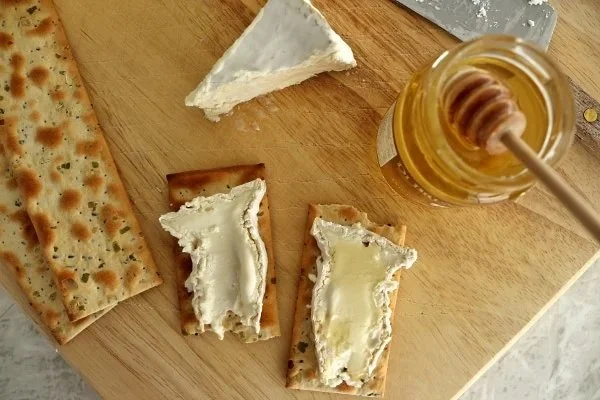
Ingredients
Method
Preparation
- Clean all surfaces and equipment thoroughly to prevent contamination.
- Set up a draining station by placing cheese forms on a draining rack in the sink.
- Pour the milk into a heavy-bottomed stockpot and warm it over medium heat to 86°F, stirring gently.
- Once warmed, remove it from heat.
- Add the prehydrated cultures and mold powders, stirring in an up-and-down motion for even distribution.
- Incorporate the calcium chloride solution, then add the rennet solution while stirring for about 20 seconds.
- Stop stirring and start a timer upon adding the rennet, watching for the flocculation point.
Curd Formation
- When ready, cut the curd into 1 ½-inch pieces and let rest for 45 minutes.
- Carefully remove the whey until the curds are visible.
- Stir gently from the top downward for three minutes, lifting but not mixing vigorously.
- Let the curds rest for five minutes.
Molding and Draining
- Scoop curds into the forms, filling them to the top.
- Allow curds to drain for 8 to 12 hours, flipping them regularly.
- Sprinkle salt on top of each cheese while still in the form, allowing it to absorb for half an hour. Flip and repeat salting.
- Let salted cheese sit for an additional 10 hours at room temperature.
Aging
- Remove the cheese from forms and place on an aging mat, covered with cheesecloth to air-dry for a day.
- Blot the cheese with a clean paper towel, then place on an aging mat in an aging bin at about 45°F.
- Flip the cheeses daily for the first two weeks, using clean hands or gloves.
- Remove moisture with a cloth or paper towel as needed.
- Expect Geotrichum candidium mold to develop on the rind within a week.
- Once fully covered in mold, wrap in cheese paper or continue flipping weekly.
- Check for ripeness after four weeks; the center should feel like a soft peach.
Notes
Ensure your milk is high-quality as it significantly impacts the final product. Precision in temperature and timing is crucial. Use a digital thermometer for accuracy and document your cheesemaking journey.