
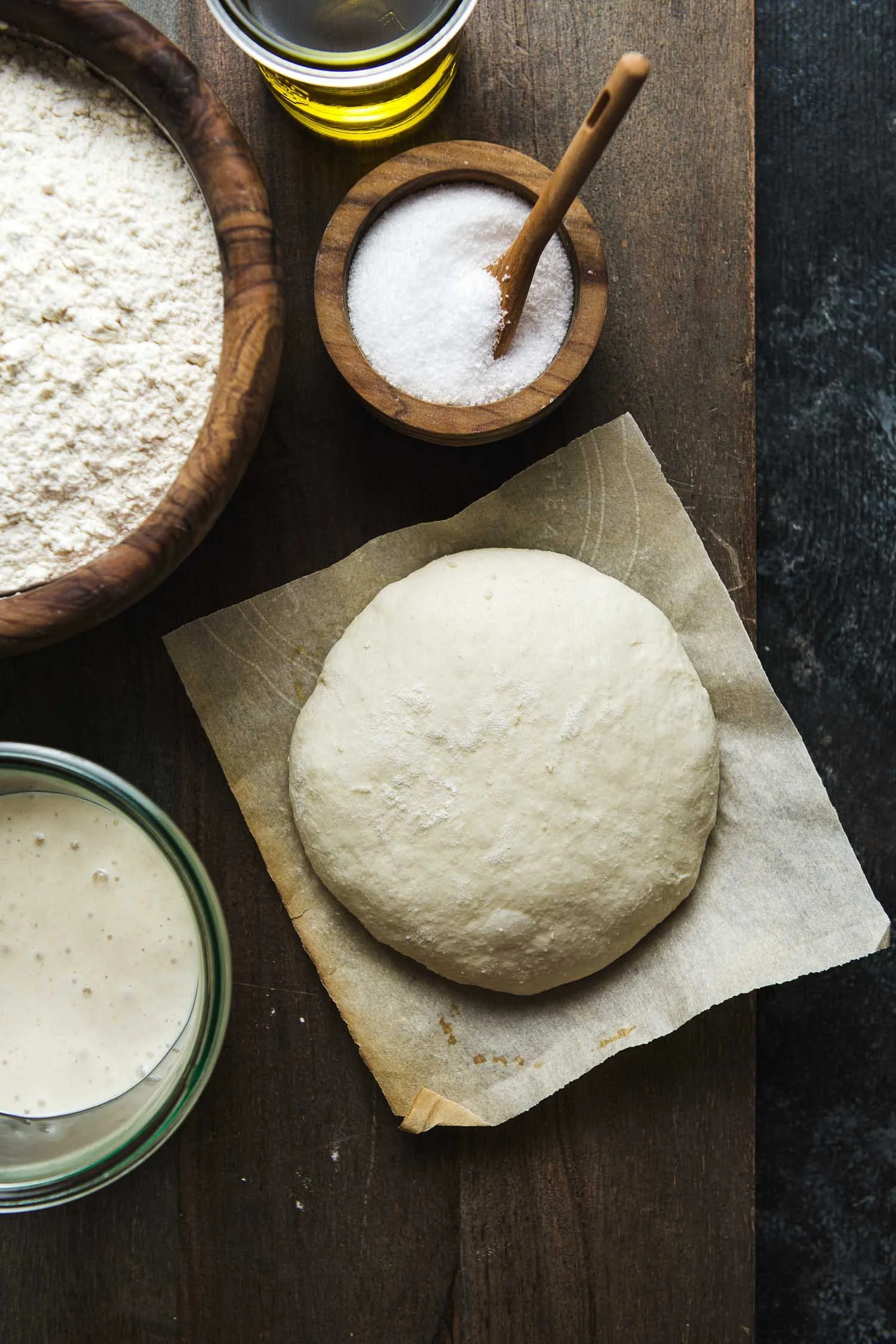
Homemade Sourdough Pizza Dough
Homemade Sourdough Pizza Dough is a delightful culinary creation that transforms your pizza night into an experience of warmth and comfort. The process of crafting this dough develops rich, complex flavors, thanks to the sourdough starter. As it bakes, the crust achieves a perfect balance of crispy on the outside and chewy within, enveloping your favorite toppings. This recipe is not only satisfying to make but also evokes nostalgia and brings family and friends together for a delicious meal. Plus, with clear, step-by-step instructions, you’ll be enjoying your homemade pizza in no time!
Ingredients
- 400 grams 00 flour (or substitute with bread or all-purpose flour): This finely milled flour provides a silky smooth texture and a delightful chew to your pizza crust.
- 50 grams semolina flour (or again, bread or all-purpose flour): Adds a slightly gritty texture that enhances the crust’s crunch.
- 330 grams lukewarm water: This is crucial for activating your sourdough starter and hydrating the flour.
- 70 grams sourdough starter (active or fed the night before): The magic ingredient that adds a tangy flavor and aids in the dough’s leavening.
- 9 grams kosher salt: Essential for flavor, it enhances the taste of the crust and balancing the dough’s fermentation.
- 25 grams olive oil (optional; replace with an equal amount of water if omitted): Provides richness and a hint of fruity flavor.
- Pizza sauce: Pureed tomato sauce seasoned with herbs, onion powder, garlic powder, and salt carries a fresh aroma and a burst of flavor.
- Mozzarella cheese: Grated or sliced thinly, this creamy cheese melts beautifully and creates that inviting stretch with each bite.
- Prosciutto slices: Adds a savory, salty element that complements the fresh flavors.
- Fresh basil: Fragrant and aromatic, it brings a refreshing pop of color and taste.
Step-by-Step Directions
Day 1, Mix the Dough
Begin your pizza journey by mixing the dough. In a large bowl, combine the flour, lukewarm water, sourdough starter, salt, and olive oil. Use your hands or a spatula to mix until fully incorporated. Cover the bowl with a lid, plastic wrap, or a towel. Let it rest for thirty minutes to one hour. Pro Tip: Take the dough’s temperature each time you handle it to assess the ideal fermentation time.
Day 1, Stretch and Fold
After resting, it’s time to develop the dough’s strength. Perform four stretch and fold sessions every thirty minutes over the next two hours. To do this, take one portion of dough and fold it over itself, pulling gently to the point of resistance. Cover and let it sit in between sessions, allowing it to continue fermenting beautifully.
Day 1, Bulk Fermentation
Your bulk fermentation phase begins right after mixing the dough. After completing the stretch and folds, allow the dough to rise until it has expanded by about 50%. It’s okay if it’s slightly less or more. Depending on the dough temperature, this can take anywhere from one to several hours.
Day 1, Cold Fermentation
Once your dough has bulked up, transfer it to the refrigerator, where it can cold ferment. Covered well, it can stay in there for up to five days. This slow fermentation develops incredible flavors, and you can pull portions to use as needed.
Day 2 (or 3, 4, or 5), Divide and Final Proof
When you’re ready to make pizza, remove the dough from the refrigerator. On a lightly floured surface, use a bench scraper to divide the dough into three or four portions. Shape each portion into a round ball and place them on a baking pan dusted with cornmeal. Cover and let them rise until they’re doubled in size, with a bubbly surface. This might take a couple of hours or longer.
Day 2 (or 3, 4, or 5), Shape and Bake
Preheat your oven to 450ºF, with your baking stone inside. After reaching the right temperature, it’s time to shape your pizza. Transfer each dough round onto a pizza peel or parchment paper, dusted with cornmeal for easy handling. Gently stretch the round into shape, keeping the rim thicker than the center for that ideal crust. Assemble your pizza with sauce, cheese, and toppings. Brush the edges with a little olive oil for extra richness and color. Bake for 8-10 minutes or until golden brown and crisp. Repeat the process for the remaining pizzas.
Tips & Tricks
- For optimal flavor, make sure your sourdough starter is bubbly and active.
- Experiment with different flours to find your favorite combination.
- If you prefer a more pronounced sour flavor, allow the dough to ferment for longer in the fridge.
- Use a pizza stone or a baking steel for the best crust texture, achieving that pizzeria-style finish at home.
- Always keep an eye on your pizzas while baking; oven temperatures can vary widely!
Serving Suggestions & Pairings
Serve each pizza fresh from the oven, garnished with extra fresh basil for an aromatic touch. Pair with a crisp salad to balance the richness of the cheese and toppings. A glass of sparkling water or a light, fruity soda complements the meal perfectly, adding a refreshing touch to your dining experience.
Nutritional Information
A slice of Homemade Sourdough Pizza (1/8 of a pizza) contains approximately:
- Calories: 210
- Carbohydrates: 28 grams
- Protein: 8 grams
- Fat: 6 grams
- Fiber: 2 grams
Enjoy this balanced meal, being mindful of your portion sizes and the richness of toppings you choose!
Storing Tips & Variations
Store any leftover pizza dough in an airtight container in the refrigerator for up to five days or freeze it for up to three months. When you’re ready to use frozen dough, thaw it overnight in the refrigerator before following the final proofing directions. For variations, try experimenting with different cheeses, sauces, and toppings, such as vegetables or various meats, to change up the flavor profile.
Conclusion
Homemade Sourdough Pizza Dough is a beautiful way to bring family and friends together, combining the art of pizza-making with the joy of sharing a meal. Try this recipe today—it’s not just about creating a dish, but about making memories. We’d love to hear your experiences; share your pizza creations and any exciting variations you discover!
FAQs
-
Can I use regular all-purpose flour instead of 00 flour?
Yes, all-purpose flour can work well, although the texture might be slightly different but still delicious! -
How do I know my sourdough starter is ready?
Your starter should be bubbly, active, and have doubled in size. A good test is to drop a spoonful in a glass of water; if it floats, it’s ready! -
Can I make this dough without a sourdough starter?
Yes, you can use commercial yeast instead! Use about 1 to 2 teaspoons of active dry yeast to achieve a similar rise. -
What can I do if my dough is too sticky?
If your dough feels overly sticky, try adding a small amount of flour, but be cautious not to overdo it. -
Is it necessary to refrigerate the dough?
While cold fermentation enhances the flavor, if you’re short on time, you can complete the process at room temperature. Just keep an eye on the dough as it will rise faster!
Homemade Sourdough Pizza Dough
Ingredients
Method
- In a large bowl, combine the flour, lukewarm water, sourdough starter, salt, and olive oil. Mix until fully incorporated. Cover the bowl and let it rest for 30 minutes to 1 hour.
- Perform four stretch and fold sessions every 30 minutes over the next 2 hours.
- Allow the dough to rise until it has expanded by about 50%.
- Transfer the dough to the refrigerator for up to 5 days.
- Remove the dough from the refrigerator and divide it into three or four portions. Let them rise until doubled in size.
- Preheat your oven to 450ºF. Shape your pizza and add toppings. Bake for 8-10 minutes.




Leave a Reply